The use of Artificial Intelligence is now establishing itself as one of the most debated – and most divisive – topics in the data and insight professions. The response to the three op-eds recently published on MRNews, written by Luc Balleroy, Laurent Florès and Mathilde Guinaudeau, reflects the strong interest professionals have in these issues, but also the questions they raise.
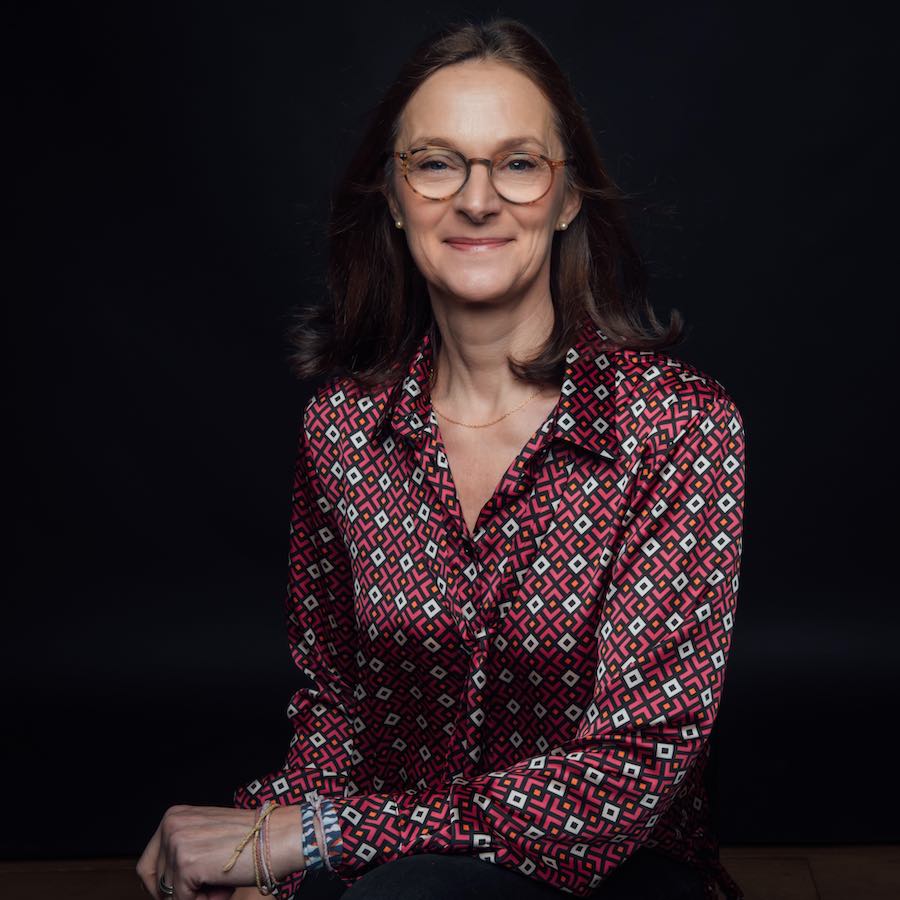
It’s in this context that we spoke with Anne-Sophie Damelincourt, Consultant and President of ESOMAR. She shares her analysis of the fundamental questions AI raises for the profession – well beyond the tools themselves – and discusses, in particular, how ESOMAR intends to support these transformations on an international scale.
MRNews: The use of Artificial Intelligence in the data and insight professions is a subject of debate, as we can see in particular through the op-eds we’ve just published. How do you see this debate?
Anne-Sophie Damelincourt (Esomar): It’s clearly a very intense debate, sometimes confused, often noisy, and one that can be anxiety-inducing for many people in the profession. AI is talked about constantly, with sometimes very assertive statements that aren’t always well substantiated. This generates a kind of fantasy, far removed from the reality of the profession, its expectations and its practices.
Conversely, the op-eds you’ve published seem particularly interesting to me because they take the time to lay things out properly. They draw on scientific and academic work, return to methodological and statistical fundamentals, and above all, they ask real, substantive questions. We’re a long way from announcement effects or « gadget » uses of AI.
For me, that’s absolutely key: if we want to move forward calmly, we need to clearly distinguish between levels of analysis, types of uses, and the purposes being pursued. As long as we put everything in the same basket, we can only fuel confusion.
If we want to move forward calmly, we need to clearly distinguish between levels of analysis, types of uses, and the purposes being pursued. As long as we put everything in the same basket, we can only fuel confusion.
Yet the same scientific sources can be read quite differently, can’t they?
Yes, that’s something that has really struck me recently. We clearly see that different players can cite exactly the same work, the same academic sources, and yet draw almost opposite conclusions from them.
This is no doubt partly explained by the positions they occupy in the ecosystem, by their business models, and by their interests too. And that’s quite understandable. Inevitably, we read things through the lens of our own activity. It’s something advertisers perceive very well, incidentally.
Hence the importance of having precise, structured debates, and above all of carefully untangling the different uses. If we stay stuck in battles of principle or overly general, superficial oppositions, we completely miss the point.
The debate is complex and can seem very « technical. » But doesn’t it actually touch on fundamental issues for our data and insight professions?
Absolutely. Of course there’s a technical dimension, but that’s not the heart of the matter. AI is shaking up the structuring benchmarks of our industry, starting with the distinction between the object and the purpose, the intention.
But beyond that, it questions the very purpose of our profession, its specificity and its role. We talk a lot about notions like the plausibility of results, « good enough » to allow decision-makers to make decisions, or the accuracy of the insights produced. These are central questions.
AI questions the very purpose of our profession, its specificity and its role. We talk a lot about notions like the plausibility of results, ‘good enough’ to allow decision-makers to make decisions, or the accuracy of the insights produced. These are central questions (…). Fundamentally, I believe AI acts as a revealer. It highlights the major questions we must ask ourselves collectively, and the key lines we need to clarify if we want to continue creating value.
AI is extremely good at producing plausible results. And that’s precisely what makes it both very appealing and potentially dangerous. The question, obviously, isn’t whether we should embrace it or not – that wouldn’t make any sense – but rather how we go about it, with what, with what safeguards, and for what uses.
Fundamentally, I believe AI acts as a revealer. It highlights the major questions we must ask ourselves collectively, and the key lines we need to clarify if we want to continue creating value.
And what about brand owners in all this? What strikes you most about their reactions to this debate?
Clients are obviously major stakeholders, and they need to be at the heart of the discussion.
They’re faced with a multitude of narratives, put forward by players whose interests sometimes diverge, or even conflict. They have to make very concrete choices, within organizations that are often already constrained, with little room to maneuver.
What’s difficult for them isn’t just choosing a solution, but understanding how it fits into an overall vision: that of their organization, their processes, their strategy. This is no doubt where support and structuring of the debate are most needed.
Also worth reading on this topic > The op-eds by Luc Balleroy (CEO of OpinionWay): « Let’s not let the mirage of synthetic interviews cloud the AI revolution, » by Laurent Florès (Université Paris Assas & L’Atelier IA): « Marketing research and AI: the fifth generation will not be an evolution, but a revolution, » and by Mathilde Guinaudeau, Ipsos bva: « Synthetic data: magic wand or mirage?«
What role do you see ESOMAR playing in this debate?
ESOMAR has a particular and central responsibility. First, because we are a global organization, with a cross-cutting view of practices on an international scale. This diversity of viewpoints is an asset, but it also implies a duty to bring structure. And also because it lies at the very heart of our values and our mission: to enlighten and guide our professions and our industry by placing ourselves right at the center of their transformation.
ESOMAR has a particular and central responsibility in this debate.
Concretely, this involves several actions. We are working on producing AI guidelines, with a target publication date around June. At the same time, we are setting up a multidisciplinary task force, bringing together agencies, advertisers, tech players and subject-matter experts, to cover uses, practices, ethics, outputs, but also organizational impacts. We also have a very important role to play on ethical issues, through the promotion of a code of conduct. This code is not just for show: it genuinely commits the organizations that sign it to certain practices and principles.
One specific point we’re addressing head-on concerns the integration of technology players.
Tell us more.
Today, these Tech specialists represent a very significant share of our membership. The challenge is to fully integrate them into the debate without turning it into a commercial showcase. This requires multiplying the formats of discussion, favoring « boundary » profiles capable of understanding insight as well as technology, and accepting confrontation. Innovation often comes from outside, and we need to know how to embrace that.
Is there already a timeline you can share regarding ESOMAR’s planned actions?
Yes. As I mentioned, the AI guidelines should be published around June. At the same time, the task force is currently being formed. It’s deliberately intended to be international and multidisciplinary.
We’re also working on organizing events dedicated to these topics, with the idea of opening up the debate widely, involving a variety of profiles, and producing concrete outputs for the profession. Some initiatives fit into a longer timeline, but the goal is really to support these changes over the long term, not to react in the heat of the moment.
Is there a final point you’d like to add, or a key message you think is essential to emphasize?
Perhaps I’d stress this one point: this debate is not only technological. It is profoundly human, methodological, cultural and organizational. It touches on the trust we place in tools, the transparency of methods, and the responsibility we bear for decisions made on the basis of our work.
This debate is not only technological. It is profoundly human, methodological, cultural and organizational. It touches on the trust we place in tools, the transparency of methods, and the responsibility we bear for decisions made on the basis of our work.
AI will not replace human judgment, intuition, or responsibility. However, it forces us to be much clearer about what we do, why we do it, and how we do it. And in that sense, it is a tremendous opportunity to shift our value as a profession and as an industry.
POUR ACTION
• Interacting with interviewees: @ Anne-Sophie Damelincourt