
At a time when artificial intelligence promises to generate brand names in seconds, naming has never seemed so accessible… or so complex. Can a name really be tested the way a concept is? Should you go with immediate gut appeal, or let it settle over time? How do you balance creativity, strategy, legal constraints and cultural stakes, especially internationally? How do you reconcile emotion and rationality?
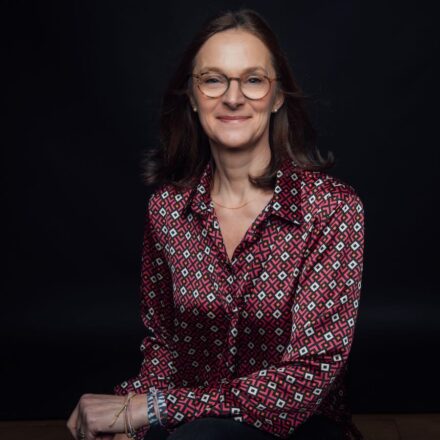
Director of Verbal Strategy & Naming at Labbrand, Nadège Depeux revisits the fundamentals of an often underestimated exercise, shares her view on the role of research, on what AI brings – and its limits – and unpacks the major shifts underway in companies’ requests.
MRNews: You head the Naming practice at Labbrand, an international agency specializing in brand issues. Many players operate in this field… How would you describe your approach and what makes it distinctive?
Nadège Depeux (Labbrand): Indeed, creating a name can seem simple. As soon as you know how to write, you feel you’ve mastered it, and there’s no shortage of players. Whether it’s branding agencies, consultancies, research firms or brands’ in-house teams, the topic is often approached solely through the lens of « creativity, » leaning on AI resources. In reality, almost anyone can give it a try, much like in design. But experience is a key condition for truly mastering this kind of exercise. That’s the case at Labbrand, since we’ve been doing this continuously for 20 years now. I myself started my career in this field. That gives us solid knowledge of the real stakes and how to navigate legal, cultural or strategic pitfalls.
But our distinctiveness also lies in our positioning. We operate as a genuine naming agency, with a dedicated department, while being integrated into a broader brand strategy agency. So we never see this activity as a mere creative or legal exercise, but as a structuring element of the brand as a whole, with lasting implications.
We operate as a genuine naming agency, with a dedicated department, while being integrated into a broader brand strategy agency. So we never see this activity as a mere creative or legal exercise, but as a structuring element of the brand as a whole, with lasting implications.
How do you connect the naming practice with your other brand strategy expertise? And what role does research play in your process?
Creating a name can’t just be a mechanical translation of a brand promise. Even when a platform is very clear, the field of possibilities remains extremely wide. Our job is to make connections, to understand the brand’s different facets, while factoring in legal constraints and the notion of distinctiveness. The idea is to bring together meaning, of course, but also form – which is essential – and the brand’s ecosystem, often structured into ranges.
English speakers clearly distinguish between the brand and the trademark. French doesn’t make that lexical distinction, but we fully take it into account. A name needs to carry meaning, but also be legally ownable. You can’t claim a generic characteristic of a market. Calling a sofa « Comfortable, » for instance, has no strategic or legal value.
English speakers clearly distinguish between the brand and the trademark. French doesn’t make that lexical distinction, but we fully take it into account.
In this interplay between strategy and naming, research plays an important role at specific moments — particularly upstream, during the inspiration phase. Qualitative research, especially projective techniques, feeds the imagination, semantic fields and vocabulary. It opens up rich avenues, well beyond the obvious words.
Research has – for some – a reputation for stifling creativity. What do you think? Does it make sense to test a name quantitatively?
The major risk of quantitative testing is that it leads to a watered-down consensus. The decision gets reduced to two questions: « do customers like it or not? » and « do they understand it? » But those aren’t the right lenses. They would probably have eliminated a name like « Amazon, » for instance, which nonetheless turned out to be an excellent choice. Originally, such a name said nothing about e-commerce. In reality, meaning is built through usage, communication and the brand’s history. A name should be seen as a kind of vessel that gets loaded with meaning over time.
In reality, meaning is built through usage, communication and the brand’s history. A name should be seen as a kind of vessel that gets loaded with meaning over time.
On the other hand, projective qualitative research is extremely powerful when used well. It helps uncover the mental universes, cultural resonances and imagery associated with a name. Provided you devote real time to it and don’t do it superficially, it’s a very fine-grained decision-support tool that lets you stay bold while being informed.
Provided you devote real time to it and don’t do it superficially, projective qualitative research is a very fine-grained decision-support tool that lets you stay bold while being informed.
Aren’t ChatGPT, Claude and the others your main competitors today?
We obviously use these tools. They let us dig into lexical fields, move fast, systematize certain stylistic constructions. But it all depends on how you prompt them. Without a clear strategy, asking an AI to suggest names isn’t very useful. We use them more to dig deeper into specific directions. Where we used to manually explore databases, geographic or linguistic lists, we can now go much further and much faster. It’s a kind of « boosted Wikipedia. »
That said, AI doesn’t replace the human creative process. It can even stifle it by limiting serendipity. It can’t intuitively jump from one idea to another, or sense what works to the ear. The phonetics, musicality and personality of a name remain deeply human. AI is a tool for amplification, not substitution.
We use AI more to dig deeper into specific directions (…), it’s a kind of « boosted Wikipedia. » But it doesn’t replace the human creative process. It can even stifle it by limiting serendipity.
Have companies’ expectations around naming changed much in recent years?
One of the most notable changes concerns internal alignment, especially within large international groups. With the proliferation of long lists of AI-generated proposals and the diversity of cultural sensitivities, reaching consensus is becoming increasingly difficult. We then play a role of strategic mediation to overcome linguistic and cultural roadblocks.
Beyond that, brand architectures tend to be simplifying. Fewer brands are being created than before, in favor of more monolithic systems, with a strong master brand and more descriptive names. It’s a healthy form of rationalization, a kind of « frugality. » But it also carries a risk: that of losing emotion and differentiation.
One of the most notable changes concerns internal alignment, especially within large international groups (…). Beyond that, brand architectures tend to be simplifying.
Do you see any notable creative, stylistic or conceptual trends? Any fads?
There are always fads. We’re seeing a shift toward softer, more human-sounding names, even in tech worlds. The rise of artificial intelligence is paradoxically accompanied by a drive toward human mimicry, right down to the first names and names chosen. Claude.ai is a good example of that.
Conceptually, certain themes emerge from year to year. In 2025, the notions of adaptation and collectiveness came up very strongly in briefs. But I’d add that these trends obviously vary by sector: food, for example, is very conversational, drawing frequently on everyday expressions to stay simple and create closeness.
Ultimately, what makes a good name? Are there names you’re particularly proud of having created? If so, which ones, and why?
There can be glaring mistakes, with names like KONE or Trumpchi for a Chinese car. But, barring special cases, a name is neither good nor bad in itself. Out of context, it’s almost impossible to judge. What makes a name good is, above all, its ability to be distinctive and to carry a singular story over time. But, paradoxically, once a name starts to live, its original meaning gets forgotten, and what remains is the phonetics. Mercedes is a great example: if the founder’s daughter had been called Lola, the brand would very likely not have the same personality!
Because of that, a good name doesn’t always win immediate approval. On the contrary, it often needs time to mature. Some brands have fully embraced this phenomenon. The name that sticks in people’s minds after a few days or weeks isn’t necessarily the one that was most liked at first.
A good brand name doesn’t always win immediate approval. On the contrary, it often needs time to mature (…). The name that sticks in people’s minds after a few days or weeks isn’t necessarily the one that was most liked at first.
Among the projects I’m proud of is Verkor, an electric battery gigafactory. It’s a non-descriptive, evocative, highly polysemous name with a strong sonic power. It caught on quickly because it carried genuine distinctiveness. Conversely, very simple names like Cap Végétal, which we created for Petit Navire, show that sometimes a slight semantic shift is enough to create a coherent, engaging and fitting story for a brand.
You launched Vocaliz, a competition open specifically to students. What’s the concept? And why this initiative?
Vocaliz was born from a desire to celebrate words and naming, which lies at the heart of Labbrand’s history. It’s also a way of passing this passion on to students, showing them that verbal creativity is accessible to everyone, provided you take the time to think it through.
The project also had a deeper dimension. We launched it after conducting a study on mental health, which affects young people in particular. One way to cope is being able to talk about it, to be able to name what you’re feeling. « Mettre des mots sur des maux » — a French play on words meaning « putting words to what ails you » — is a fundamental act.
Read also > Vocaliz Competition – Labbrand: the 3 new words of 2025
Lastly, Vocaliz builds bridges: with schools, with students, with our clients. It’s therefore a project that is at once cultural, educational and human.
Do you have a final message for advertisers’ research teams on these naming issues and how to approach them?
The first point, often overlooked, is legal clearance. Testing a name that isn’t available makes no sense. A simple Google search isn’t enough; you need to secure it legally beforehand.
Next, it’s essential to adapt research methods to reflect the role names play. You don’t test a structuring brand name the same way you test a descriptive one. And above all, you need to allow time. A name can’t be judged in two minutes. Memorability and resonance over time are far more relevant indicators than a gut reaction.
FOR ACTION
• Get in touch with the interviewee: @ Nadège Depeux